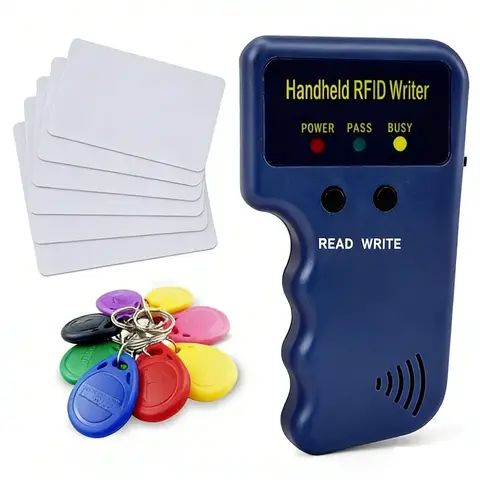
In the rapidly evolving world of technology, RFID (Radio-Frequency Identification) technology has become an indispensable tool across various industries. From retail and supply chain management to security and access control, RFID systems are revolutionizing the way businesses operate. However, with the increasing reliance on RFID technology, there has been a parallel rise in the demand for advanced tools like RFID duplicators. An RFID duplicator is a device that can copy the information stored on a legitimate RFID tag, creating a clone that can be used to access systems or items protected by the original RFID tag. This marketing copy will delve into the intricacies of RFID duplicators, their uses, and the importance of choosing the right one.
What is an RFID Duplicator?
At its core, an RFID duplicator is a specialized device designed to read, duplicate, and modify the data stored on RFID tags. These devices use advanced technologies to capture the unique identifier (UID) and other information from an existing RFID tag, which can then be used to create a duplicate tag. RFID duplicators are not merely copying the tag but can also be used to change the information to access restricted areas, products, or services.
Applications of RFID Duplicators
RFID duplicators are versatile tools with a wide range of applications across multiple industries. Here are some of the most significant uses:
1. Security and Access Control
One of the primary applications of RFID duplicators is in the security sector. Many organizations use RFID tags for access control, particularly in facilities where physical security is paramount. RFID duplicators can be used to clone these tags, gaining unauthorized access to restricted areas. This capability makes RFID duplicators a valuable tool for both legitimate users and malicious actors.
2. Supply Chain Management
In the supply chain, RFID tags are used to track and manage inventory. RFID duplicators can be used to create duplicate tags, potentially leading to inventory discrepancies and theft. On the other hand, legitimate users might use these devices to track and manage their assets more efficiently.
3. Retail and E-commerce
Retailers often use RFID tags to secure their products against theft. RFID duplicators can be used to bypass these security measures, allowing for easy theft. Additionally, they can be used to create duplicate tags for inventory management purposes.
4. Transport and Logistics
In the logistics sector, RFID tags are used to track shipments and manage inventory. RFID duplicators can be used to create duplicate tags, leading to potential fraud and mismanagement of goods.
Types of RFID Duplicators
There are several types of RFID duplicators, each designed for specific purposes and use cases. Here are the most common types:
1. High-Frequency (HF) RFID Duplicators
HF RFID duplicators are designed to work with high-frequency RFID tags, which operate at 13.56 MHz. These are commonly used in many industries, including access control, logistics, and retail. HF RFID duplicators are versatile and can be used in a variety of settings.
2. Ultra-High Frequency (UHF) RFID Duplicators
UHF RFID duplicators operate at frequencies between 860 MHz and 960 MHz. They are known for their long-range capabilities and are often used in large-scale inventory management and logistics applications. UHF RFID duplicators can read tags from a greater distance, making them highly effective in wide-open environments.
3. Microwave RFID Duplicators
Microwave RFID duplicators operate at frequencies between 2.4 GHz and 5.8 GHz. These are commonly used in wireless communication systems and can be used to duplicate RFID tags in environments where other frequencies may not be suitable. Microwave RFID duplicators offer high data transmission rates and can be used in a variety of industrial settings.
How RFID Duplicators Work
RFID duplicators work by capturing the data from a legitimate RFID tag and storing it in a memory module. This memory module can then be used to create a duplicate tag. The process typically involves the following steps:
1. Detection: The RFID duplicator detects the presence of an RFID tag within its range.
2. Data Capture: The duplicator reads the data stored on the tag, including the UID and other information.
3. Data Storage: The captured data is stored in the memory module of the duplicator.
4. Tag Creation: The duplicator uses the stored data to create a duplicate RFID tag, which can be used to gain access or for other purposes.
Importance of Choosing the Right RFID Duplicator
While RFID duplicators offer numerous benefits, it is crucial to choose the right device based on your specific needs. Here are some key factors to consider:
1. Frequency Compatibility
Different RFID systems operate on different frequencies. Ensure that your RFID duplicator is compatible with the frequency used by your RFID tags. For example, if your tags operate on HF, choose an HF duplicator. Compatibility is crucial to ensure that the duplicator works effectively.
2. Range and Readability
The range and readability of an RFID duplicator are critical factors. High-range duplicators can read tags from greater distances, making them suitable for large-scale applications. Choose a duplicator that can read tags from the desired distance based on your specific needs.
3. Data Security
Data security is a significant concern when using RFID duplicators. Choose a duplicator with robust security features, such as encryption and secure memory modules, to prevent unauthorized access to the captured data.
4. User-Friendliness
A user-friendly interface can significantly enhance the efficiency of RFID duplicators. Look for devices with intuitive controls and clear displays that make it easy to use the device without extensive training.
Conclusion: The Future of RFID Duplicators
As technology continues to advance, the use of RFID duplicators is likely to become more widespread. While these devices offer valuable capabilities, it is essential to use them responsibly and ethically. Organizations must ensure that their RFID systems are secure and robust against unauthorized access. By choosing the right RFID duplicator, businesses can maximize the benefits of RFID technology while maintaining the integrity and security of their systems.
FAQs about RFID Duplicators
1. Are RFID Duplicators Legal?
The legality of using RFID duplicators varies by jurisdiction. In many places, unauthorized use of RFID duplicators for criminal purposes is illegal. Always check local laws and regulations before using an RFID duplicator.
2. How Secure Are RFID Duplicators?
High-quality RFID duplicators often come with security features such as encryption and secure memory modules. These features help prevent unauthorized access to the captured data. However, it is essential to use these devices responsibly and follow best practices to ensure security.
3. Can RFID Duplicators Read All Types of RFID Tags?
No, RFID duplicators are designed to work with specific types of RFID tags. Choose a duplicator that is compatible with the frequency and type of RFID tags used in your application.
4. What Are the Risks of Using RFID Duplicators?
The primary risks associated with RFID duplicators include unauthorized access to secure systems, financial losses due to theft, and legal penalties for misuse. To mitigate these risks, use RFID duplicators responsibly and ensure that your systems are secure.
Final Thoughts
RFID duplicators are powerful tools that offer a range of benefits, from improved inventory management to enhanced security. However, their use must be carefully considered to avoid potential risks and legal issues. By choosing the right RFID duplicator and using it responsibly, organizations can leverage the full potential of RFID technology while maintaining the integrity of their systems.
See more details about
rfid duplicator in AliExpress Video Page.