






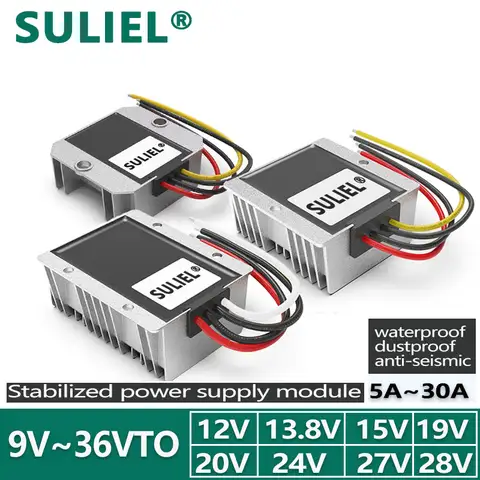
Results for voltage boost converter
Voltage boost converter is a critical power management solution for applications requiring higher output voltage from a lower input source. Whether you're powering microcontrollers, LED arrays, or portable devices, a reliable voltage boost converter ensures stable, efficient step-up voltage regulation across a wide input range. Our selection of high-performance boost modules—such as the MT3608-based DC-DC step-up converters, adjustable 35W buck-boost units with digital LCD displays, and constant-current LED drivers—delivers precision, durability, and versatility for both hobbyists and professionals.
The primary search intent behind “voltage boost converter” centers on finding a compact, efficient, and adjustable power module capable of safely increasing voltage levels while maintaining stable output. Users often seek solutions that support variable input voltages (e.g., 2V–24V), offer adjustable output (5V, 9V, 12V, 28V), and handle moderate to high current loads (up to 2A). These needs are met by our MT3608-based modules, which feature low quiescent current, high efficiency (>90%), and built-in over-current and short-circuit protection—essential for protecting sensitive electronics.
For optimal performance, follow these setup steps:
Avoid common pitfalls: using undersized wires, neglecting heat dissipation, or exceeding the maximum output current. Always test under load before full deployment. Our MT3608 boost modules are ideal for Arduino and Raspberry Pi projects, while the 35W adjustable buck-boost with LCD excels in solar power systems and DIY battery packs. The DC-DC constant current LED driver ensures consistent brightness for flashlights and headlights, even as battery voltage fluctuates. Choose based on your current, voltage, and precision needs—each module is engineered for reliability, efficiency, and long-term performance.
The primary search intent behind “voltage boost converter” centers on finding a compact, efficient, and adjustable power module capable of safely increasing voltage levels while maintaining stable output. Users often seek solutions that support variable input voltages (e.g., 2V–24V), offer adjustable output (5V, 9V, 12V, 28V), and handle moderate to high current loads (up to 2A). These needs are met by our MT3608-based modules, which feature low quiescent current, high efficiency (>90%), and built-in over-current and short-circuit protection—essential for protecting sensitive electronics.
- DC-DC Boost Converter
- A type of power converter that increases the input voltage to a higher, regulated output voltage using inductive energy storage and switching control. Ideal for battery-powered systems where voltage drops over time.
- Step-Up Voltage Regulation
- The process of raising a lower DC voltage to a higher DC voltage level, commonly used in solar chargers, Arduino projects, and LED lighting systems.
- Adjustable Output
- Allows users to fine-tune the output voltage via a potentiometer or external feedback, enabling compatibility with diverse devices.
For optimal performance, follow these setup steps:
- Verify input voltage range (e.g., 2V–24V) matches your power source (e.g., 3xAA batteries, 12V supply).
- Use a capacitor (100μF–470μF) at the input to stabilize voltage and reduce ripple.
- Adjust the output voltage using the onboard potentiometer—start low and increase gradually.
- Ensure the load does not exceed the module’s maximum current (e.g., 2A for MT3608) to prevent overheating.
- For high-power applications (e.g., 35W), use the digital LCD display module for real-time monitoring of input/output voltage and current.
Avoid common pitfalls: using undersized wires, neglecting heat dissipation, or exceeding the maximum output current. Always test under load before full deployment. Our MT3608 boost modules are ideal for Arduino and Raspberry Pi projects, while the 35W adjustable buck-boost with LCD excels in solar power systems and DIY battery packs. The DC-DC constant current LED driver ensures consistent brightness for flashlights and headlights, even as battery voltage fluctuates. Choose based on your current, voltage, and precision needs—each module is engineered for reliability, efficiency, and long-term performance.