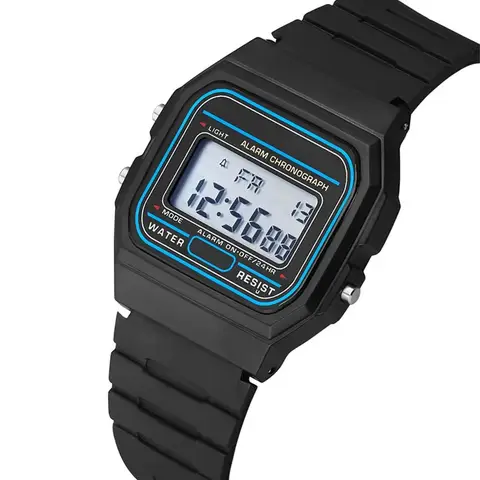
Watches are more than just timekeeping devices—they are fashion accessories, status symbols, and personal expressions. Whether you're shopping for a new watch for daily wear or looking for a gift, it's important to understand what to look for in a watch and how to choose the right one for your lifestyle. In this article, we’ll explore the best ways to select and use watches, with a focus on practicality, style, and value.
How Can I Choose the Right Watch for My Daily Routine?
Answer first: To choose the right watch for your daily routine, consider your lifestyle, the watch’s functionality, and its design. A well-chosen watch should complement your activities and personal style. When selecting a watch for daily use, start by identifying your primary needs. Are you an office worker who needs a classic, elegant timepiece? Or are you an active person who needs a durable, water-resistant model? Here’s how to approach the selection process:
- Assess your lifestyle and activities. If you're in a professional setting, a sleek analog watch with a leather strap is ideal. If you're into sports or outdoor activities, a digital or smartwatch with GPS and water resistance is better.
- Determine the watch type. Analog watches are timeless and elegant, while digital watches offer more features like alarms and timers. Smartwatches integrate with your phone and offer notifications, fitness tracking, and more.
- Check the materials and durability. Stainless steel, titanium, and silicone are popular materials for different uses. Water resistance is also important if you're likely to be near water or sweat.
- Analog Watch
- A traditional watch with hour and minute hands that move around a dial. It is often associated with elegance and style.
- Water Resistance
- A feature that indicates how well a watch can withstand exposure to water. It is measured in meters (e.g., 30m, 50m, 100m).
Here’s a comparison of three popular watch types for daily use:
| Watch Type | Best For | Water Resistance | Price Range |
| Analog | Professional settings, formal events | 30m | $50–$300 |
| Digital | Active lifestyles, outdoor activities | 50m–100m | $30–$200 |
| Smartwatch | Smartphone integration, fitness tracking | 50m–100m | $100–$500 |
What Features Should I Look for in a Watch for Travel?
Answer first: When choosing a watch for travel, prioritize features like water resistance, battery life, and world time functionality. A travel-friendly watch should be reliable and versatile across different environments. Traveling often means changing time zones, being exposed to different weather conditions, and engaging in various activities. A good travel watch should be able to handle these challenges. Here’s how to choose the right one:
- Look for a world time feature. This allows you to track multiple time zones simultaneously, which is especially useful for international travel.
- Check the battery life. A long-lasting battery is essential when you're on the go and may not have easy access to a charger.
- Ensure water resistance. Whether you're swimming or caught in the rain, a water-resistant watch will protect against damage.
- World Time Feature
- A function that allows a watch to display the time in multiple time zones simultaneously. It is especially useful for frequent travelers.
- Battery Life
- The length of time a watch can operate before needing to be recharged or replaced. It is an important consideration for travel watches.
Here’s a comparison of three travel-friendly watch features:
| Feature | Description | Importance for Travel |
| World Time | Displays multiple time zones | High |
| Water Resistance | Protects against water damage | High |
| Battery Life | How long the watch lasts on a single charge | Medium |
What Do Users Say About the Best Watches on the Market?
Answer first: Users generally praise watches that offer a balance of style, functionality, and durability. Reviews often highlight design, comfort, and battery life as key factors in satisfaction. User reviews are a valuable resource when choosing a watch. They provide real-world insights into how a watch performs in different situations. Here are some common themes from user feedback:
- Design and Aesthetics
- Users often mention how a watch looks and how well it matches their personal style. A good design can make a watch feel like a personal statement.
- Comfort
- Comfort is especially important for daily wear. Users frequently comment on the weight, strap material, and fit of a watch.
- Battery Life
- For digital and smartwatches, battery life is a major concern. Users appreciate models that last several days or even weeks on a single charge.
Here’s a summary of user feedback for three popular watch models:
| Watch Model | Design Rating | Comfort Rating | Battery Life |
| Classic Analog Watch | 4.8/5 | 4.7/5 | Not applicable |
| Digital Sports Watch | 4.5/5 | 4.6/5 | 7 days |
| Smartwatch with GPS | 4.4/5 | 4.5/5 | 5 days |
Other Related Topics You Might Be Interested In
If you're interested in learning more about time-related topics, you might also want to explore the meaning of terms like “
hour clock”, “
hour time”, or “
cha time”. These terms are often used in different contexts, such as in timekeeping, language learning, or cultural references. Understanding these terms can help you better navigate discussions about time and watches. Additionally, if you're learning English or translating time-related content, you may come across variations like “
houres”, “
houre”, or “
hourr”. These are outdated or misspelled forms of the word “
hour”, which is the standard term used in modern English. You might also encounter phrases like “
the hour”, “
the hours”, or “
hour english”, which are used in different grammatical contexts. If you're looking for visual content, you might also search for “
صور ساعات”, which means “watch images” in Arabic. This can be a helpful resource if you're trying to identify or compare different watch styles. In summary, whether you're shopping for a new watch or simply curious about time-related terms, understanding the right terminology and features can help you make more informed decisions.