
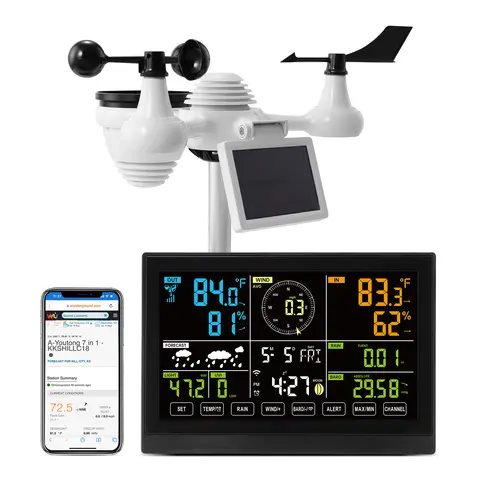








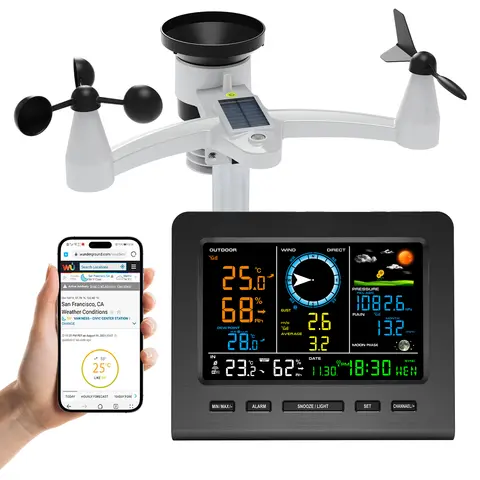


Results for digital weather station
Digital weather stations offer real-time, accurate environmental monitoring for homes, gardens, and outdoor activities—combining temperature, humidity, pressure, and forecast data in one compact device.
When users search for digital weather station, they are typically seeking a reliable, all-in-one solution to track indoor and outdoor climate conditions without relying on generic forecasts. These devices go beyond simple thermometers by integrating multiple sensors to deliver comprehensive weather insights. Whether you're a gardener monitoring frost risks, a homeowner managing indoor comfort, or an outdoor enthusiast planning a hike, a digital weather station provides actionable data with minimal setup.
For optimal performance, consider the following setup steps:
While the listed products—such as a hand sand ice machine, digital thermometer with 8-second reading, and Wi-Fi mini camera—are not digital weather stations themselves, they reflect the broader ecosystem of smart home monitoring tools. The digital thermometer with 0.01°C precision and 3-color backlight demonstrates the importance of sensor accuracy and user-friendly design, qualities directly transferable to weather stations. Similarly, the mini camera with night vision highlights the value of compact, reliable, and continuously monitored devices—key features users expect in modern environmental tech.
To avoid common pitfalls: don’t place sensors in enclosed spaces, avoid cheap models with unverified sensors, and verify that the device supports both indoor and outdoor data syncing. Always check for CE, FCC, and RoHS certifications to ensure safety and compliance.
In summary, a high-quality digital weather station delivers precise, real-time environmental data—empowering smarter decisions for daily life and long-term planning.
When users search for digital weather station, they are typically seeking a reliable, all-in-one solution to track indoor and outdoor climate conditions without relying on generic forecasts. These devices go beyond simple thermometers by integrating multiple sensors to deliver comprehensive weather insights. Whether you're a gardener monitoring frost risks, a homeowner managing indoor comfort, or an outdoor enthusiast planning a hike, a digital weather station provides actionable data with minimal setup.
- Digital Weather Station
- A smart home device that measures and displays real-time environmental data such as temperature, humidity, atmospheric pressure, and sometimes wind speed and rainfall. Often includes forecast indicators based on pressure trends.
- Indoor vs. Outdoor Sensors
- Indoor sensors track conditions inside your home; outdoor sensors are weatherproof and placed outside to capture true ambient conditions. Many models support both for complete coverage.
- Forecast Accuracy
- Based on pressure trend analysis—rising pressure usually indicates fair weather, falling pressure suggests storms. Not a substitute for professional forecasts, but useful for short-term planning.
For optimal performance, consider the following setup steps:
- Choose a location with minimal interference—avoid placing the sensor near heating vents, direct sunlight, or large metal objects that can distort readings.
- Calibrate the device—follow manufacturer instructions to ensure temperature and humidity readings match known benchmarks (e.g., use a calibrated thermometer for verification).
- Update firmware regularly—if your station supports wireless updates, keep it current for improved accuracy and new features.
- Use a stable power source—battery-powered models should use high-quality alkaline batteries; consider solar-powered options for long-term outdoor use.
While the listed products—such as a hand sand ice machine, digital thermometer with 8-second reading, and Wi-Fi mini camera—are not digital weather stations themselves, they reflect the broader ecosystem of smart home monitoring tools. The digital thermometer with 0.01°C precision and 3-color backlight demonstrates the importance of sensor accuracy and user-friendly design, qualities directly transferable to weather stations. Similarly, the mini camera with night vision highlights the value of compact, reliable, and continuously monitored devices—key features users expect in modern environmental tech.
To avoid common pitfalls: don’t place sensors in enclosed spaces, avoid cheap models with unverified sensors, and verify that the device supports both indoor and outdoor data syncing. Always check for CE, FCC, and RoHS certifications to ensure safety and compliance.
In summary, a high-quality digital weather station delivers precise, real-time environmental data—empowering smarter decisions for daily life and long-term planning.