What Is a Linear Actuator 12V and When Should I Use It?
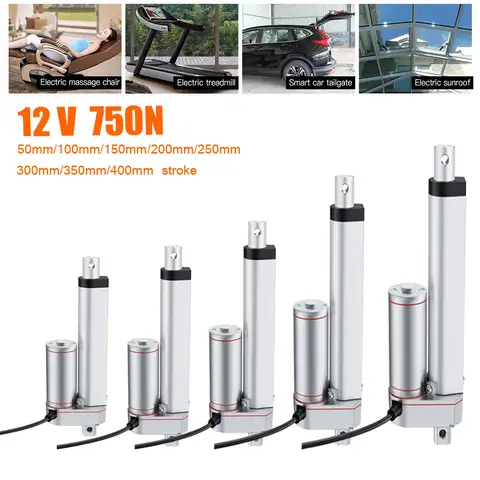
Answer: A linear actuator 12V is a motorized device that converts rotational motion into linear motion, typically used to push, pull, or lift objects. It is ideal for applications such as automated doors, adjustable furniture, or robotics, especially when powered by a 12V DC power source. A linear actuator 12V is commonly used in applications where a compact, low-voltage motor is needed. For example, imagine you are a hobbyist building a custom adjustable desk. You need a motor that can smoothly raise and lower the desk surface using a 12V power supply from a battery or wall adapter. A linear actuator 12V is the perfect fit for this scenario.
- Linear Actuator
- A mechanical device that produces linear motion from a rotational input, often used in automation and control systems.
- 12V DC Power
- A direct current power supply of 12 volts, commonly used in automotive and low-voltage electronics.
- Identify the application that requires linear motion (e.g., lifting, pushing, or pulling).
- Check the required stroke length and force (e.g., 100mm, 5000N).
- Select a linear actuator 12V that matches the voltage and mechanical requirements.
- Ensure the actuator is compatible with your control system (e.g., remote control, microcontroller).
How Do I Choose the Right Linear Actuator 12V for My Project?
Answer: To choose the right linear actuator 12V, you must consider the stroke length, force output, speed, and environmental conditions. For example, if you're building a
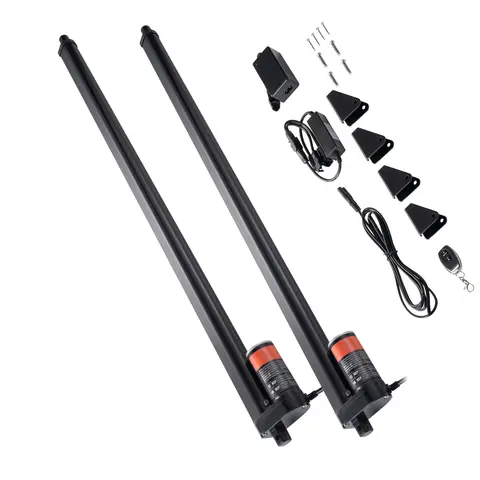
linear actuator 12V 400mm for a car seat adjustment system, you need a model that can handle the weight and provide smooth motion. Here’s a comparison of three common linear actuator 12V models:
| Model | Stroke Length | Force Output | Speed (mm/s) | IP Rating |
| Actuator A | 400mm | 5000N | 10 | IP54 |
| Actuator B | 300mm | 8000N | 8 | IP67 |
| Actuator C | 100mm | 1200N | 15 | IP44 |
- Determine the stroke length needed for your application (e.g., linear actuator 12V 100mm for a small lift).
- Calculate the force required to move the load (e.g., linear actuator 12V 5000N for a heavy-duty lift).
- Check the speed and ensure it matches your project’s timing requirements.
- Consider the environment (e.g., use a linear actuator 12V IP67 for outdoor or wet conditions).
What Are the Common Issues with Linear Actuator 12V and How to Fix Them?
Answer: Common issues with linear actuator 12V include overheating, insufficient force, and erratic movement. These problems can often be resolved by checking the power supply, lubrication, and control signals. For example, I once used a
linear actuator 12V 4000N in a custom lift system for a warehouse. After a few weeks, the actuator started to overheat and stop mid-motion. I discovered that the power supply was not delivering a stable 12V, and the actuator was not properly lubricated.
- Check the power supply to ensure it is delivering a stable 12V DC.
- Inspect the actuator for proper lubrication and clean any debris from the rod.
- Verify the control signals (e.g., from a remote or microcontroller) are functioning correctly.
- If the actuator is overheating, consider using a linear actuator 12V IP67 model for better heat dissipation in harsh environments.
User Reviews and Real-World Performance of Linear Actuator 12V
Answer: Users generally report high satisfaction with linear actuator 12V models that offer good build quality, smooth operation, and reliable performance. For example, the
linear actuator 12V 8000N is praised for its durability and strength in lifting heavy loads. Here are some user feedback points:
Other Linear Actuator Variants and Their Uses
Answer: While linear actuator 12V is a popular choice for low-voltage applications, there are other variants such as
linear actuator 120V,
linear actuator 110V, and
linear actuator 48V for higher power needs. For instance,
linear actuator 36V is often used in industrial automation, while
linear actuator 5V is suitable for small robotics. If you're working on a project that requires more power, consider the
linear actuator 120V or
linear actuator 110V. For compact and lightweight applications, the
linear actuator 5V is a good option. Additionally, the
linear actuator 12V 300mm s is ideal for fast-moving applications, and the
linear actuator 12V 8000N is suitable for heavy lifting.
- Linear Actuator 120V
- Designed for high-power applications, often used in industrial settings.
- Linear Actuator 48V
- Offers a balance between power and efficiency, suitable for robotics and automation.
- Linear Actuator 5V
- Used in small-scale robotics and DIY projects due to its low power consumption.